A policy sets expectations
A policy establishes a rule, standard, boundary, or organizational expectation. It tells people what is required or prohibited and usually explains who the policy applies to. Policies should be clear enough that employees and managers understand the expectation without needing to interpret the author’s intent.
A procedure describes the sequence
A procedure explains the sequence used to carry out a process. It connects the policy or business requirement to the work people perform and clarifies what happens, in what order, and who is responsible at key points.
An SOP standardizes recurring work
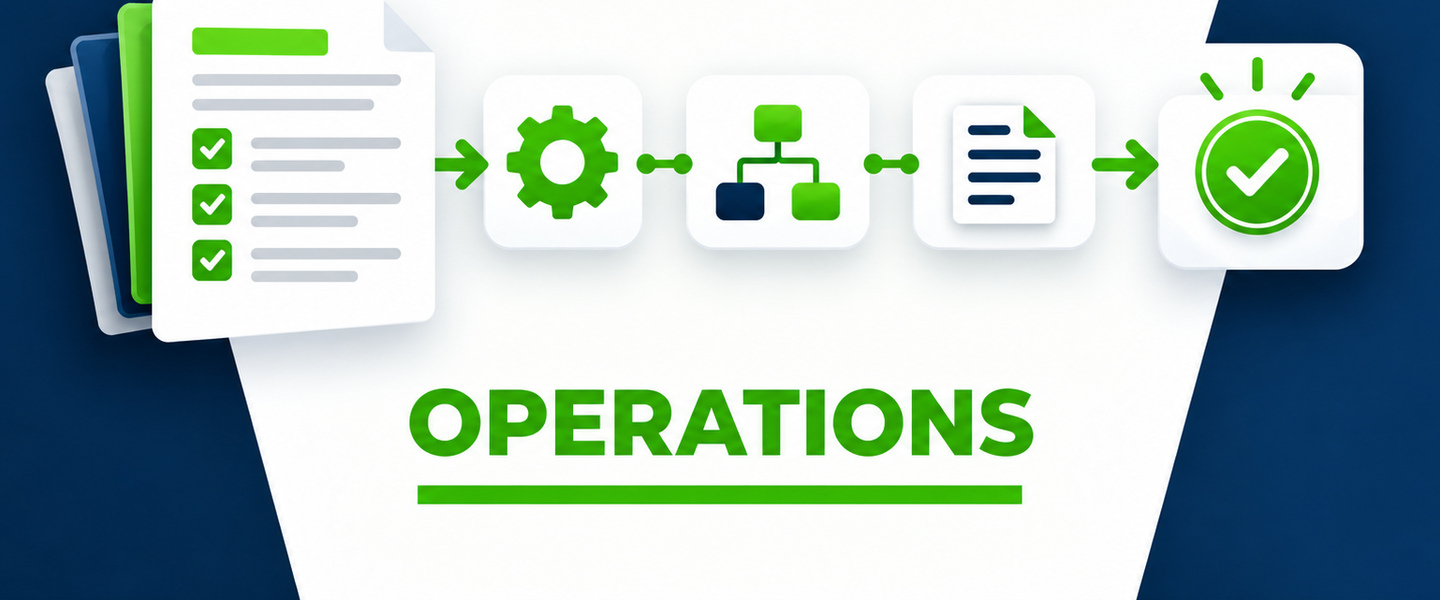
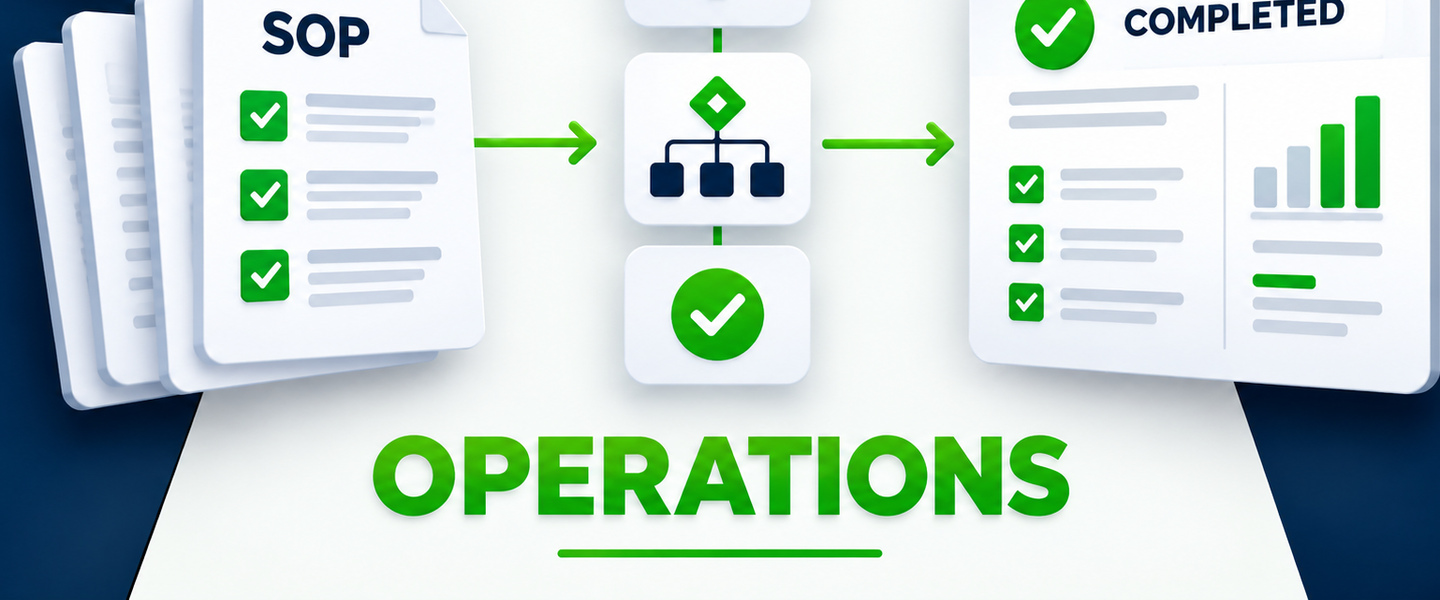
A standard operating procedure takes recurring operational work and defines a consistent way to perform it. Depending on the process, an SOP may include ownership, required steps, decision points, documentation requirements, exceptions, and the expected result. The goal is consistency without creating documentation so complicated that employees stop using it.
Work instructions provide task-level detail
Some tasks require detailed instructions for a particular tool, system, or step. Those instructions can sit beneath a broader procedure or SOP rather than turning the main document into an overly technical manual.
A checklist supports execution
A checklist is useful when the process is already understood but specific steps cannot be missed. Opening procedures, onboarding tasks, month-end reporting, equipment checks, quality reviews, and approval packages are common examples.
Use the smallest amount of documentation that solves the problem
Not every task needs a formal policy, and not every process needs a long SOP. The right documentation system gives people clarity while staying proportionate to the risk, complexity, and frequency of the work.
A beautifully formatted policy that never reaches the workflow will not solve an operational problem. Start with what people actually need to know and do, then choose the documentation that supports that work.