
Growth creates pressure before it creates clarity
When the team is overloaded, it is tempting to solve the problem immediately by hiring another person or buying another tool. Sometimes that is exactly right. Other times it adds cost to a process that was already inefficient.
Before choosing the solution, look at what kind of work is creating the pressure.
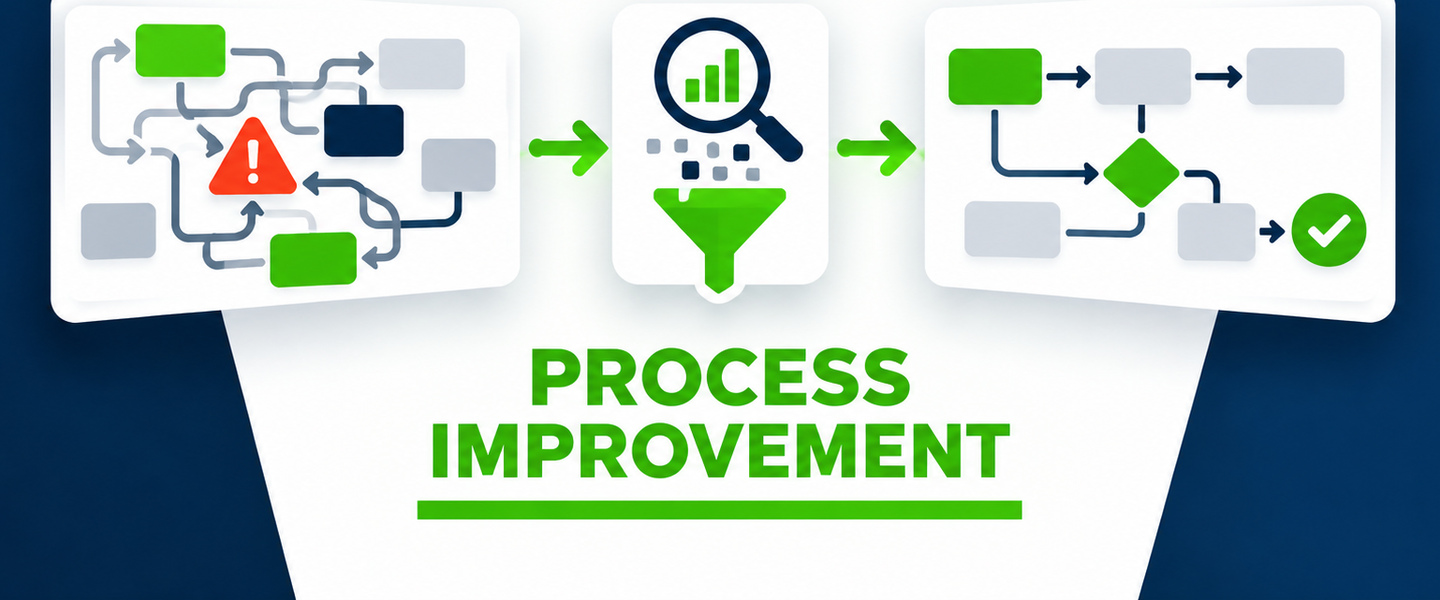
Fix the process when the work is inconsistent or unclear
If employees handle the same request differently, information arrives incomplete, approvals are confusing, or work regularly comes back for correction, adding capacity may simply help the business do the wrong process faster.
Clarify the workflow, remove unnecessary steps, improve intake, and define ownership before scaling the problem.
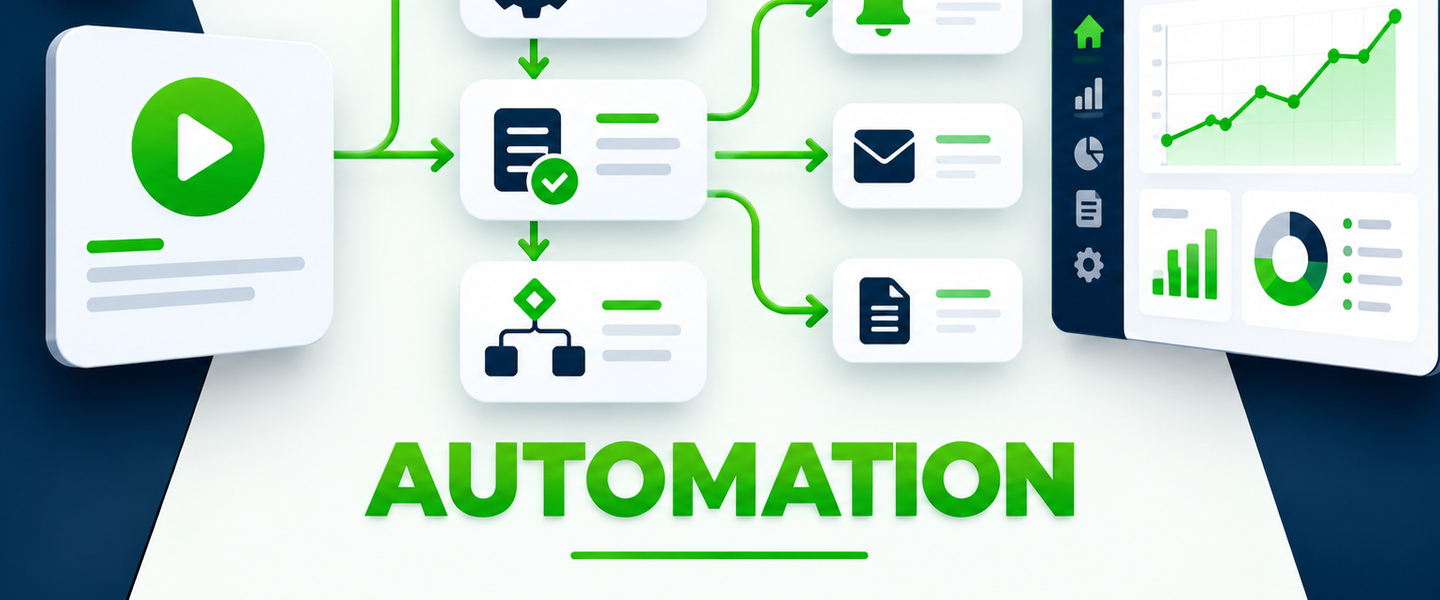
Automate when the work is repetitive and rules-based
Automation is strongest when the same actions happen frequently, the inputs are structured, the rules are clear, and exceptions can be identified. Examples include reminders, routing, document generation, status updates, data consolidation, and recurring reporting preparation.
Hire when the work requires sustained human capacity or judgment
If demand has truly increased and the work requires relationship management, complex judgment, creative problem-solving, physical presence, or a workload that cannot be removed through process improvement, additional people may be the right investment.
If the answer is no because the workflow itself would break, improve the process or system before adding people around it. If the answer is yes and the work still needs human judgment, hiring becomes easier to justify.
Use a combination when the workflow has several kinds of work
Many growing businesses need all three. A process may be simplified first, repetitive steps automated second, and then a new employee added for the higher-value work that remains. That sequence can make the role easier to train, easier to measure, and more productive.
Measure the decision against the real constraint
Look at cycle time, backlog, error rate, hours spent, cost per transaction, customer impact, and how much management attention the work consumes. The best solution is the one that addresses the actual constraint rather than the most visible symptom.