Growth usually breaks the informal systems first
Small businesses can run surprisingly well on memory, shared inboxes, spreadsheets, verbal instructions, and a few key employees who know how everything works. That flexibility is often useful early on. The problem is that informal systems have limits. As more customers, employees, locations, transactions, or responsibilities are added, the work becomes harder to coordinate and the cost of inconsistency rises.
The first warning sign is often not a dramatic failure. It is friction. Reports take longer. Managers answer the same questions repeatedly. Employees maintain their own versions of trackers. More work needs follow-up. New staff take longer to train. Important decisions depend on one person being available. Those are all signs that the operating model is being asked to carry more than it was designed for.
Six warning signs that the business has outgrown its current systems
1. Too much knowledge lives with a few people. When one employee knows the exceptions, shortcuts, customer history, reporting steps, or approval process, the business has a concentration risk. The answer is not to remove expertise. It is to make critical knowledge easier to transfer and repeat.
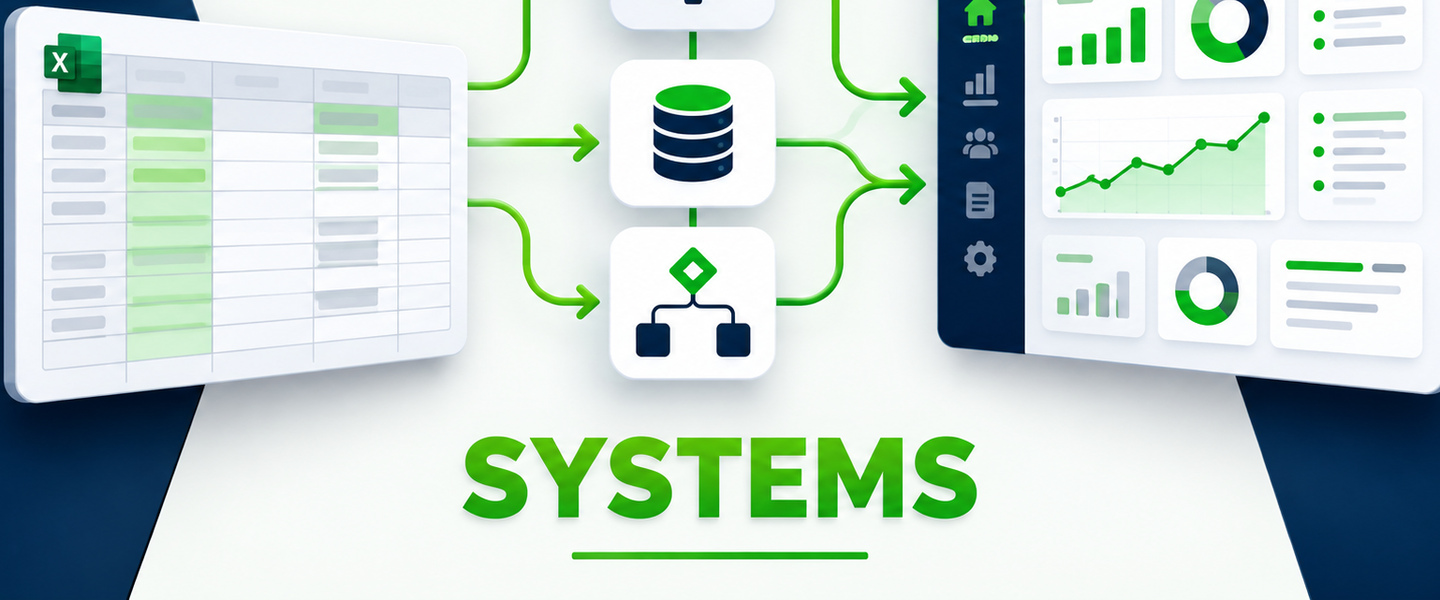
2. Different people maintain different versions of the truth. If sales numbers, project status, inventory, staffing information, or customer details exist in multiple spreadsheets or systems, growth makes reconciliation harder. A business needs clear ownership of data and a reliable source for the information leadership actually uses.
3. Managers are becoming the workflow. A process that only moves forward because a manager remembers to check, remind, approve, or follow up will eventually slow down. Clear triggers, ownership, status tracking, and escalation rules can remove unnecessary dependence on manual supervision.
4. Training takes too long because the process is mostly verbal. When onboarding depends on sitting next to the right person for weeks, growth becomes harder. Documentation does not need to be complicated. Clear procedures, examples, checklists, and expectations can make training more consistent.
5. Reporting is becoming a project instead of a routine. If the team spends hours every week gathering, cleaning, and combining information before leadership can use it, the reporting process itself needs attention. More volume will only make that slower.
6. Small errors are turning into repeated operational problems. A missed handoff or wrong entry may be easy to fix once. If the same issue keeps happening as volume increases, the process needs a stronger control, clearer ownership, or a better system.
That is why the best time to strengthen a process is often when the team first notices recurring friction, not after the problem becomes a crisis.
Do not build a complex system just because the company is growing
Scaling does not mean adding software everywhere or documenting every possible task. The right question is: which parts of the operation are becoming unreliable, time-consuming, difficult to see, or overly dependent on individuals?
Start with the recurring work that has the highest operational impact. That may be customer onboarding, job tracking, approvals, reporting, inventory, scheduling, month-end processes, quality checks, or internal requests. Strengthen the parts that create the most friction first.
What a stronger operational foundation can include
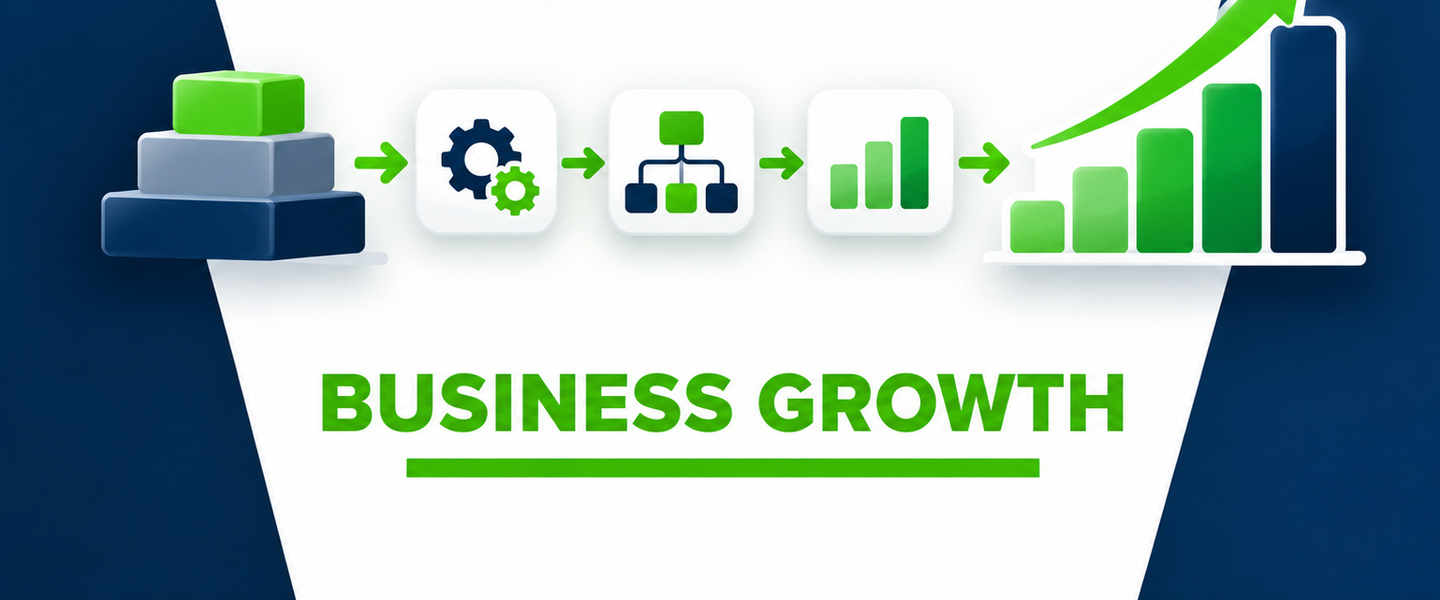
Depending on the business, the solution may be a documented process, a shared tracker, a standardized form, a dashboard, an automated workflow, a set of clear ownership rules, or a combination of several pieces. The important part is that they support the same operating process instead of becoming separate tools people have to manage around.
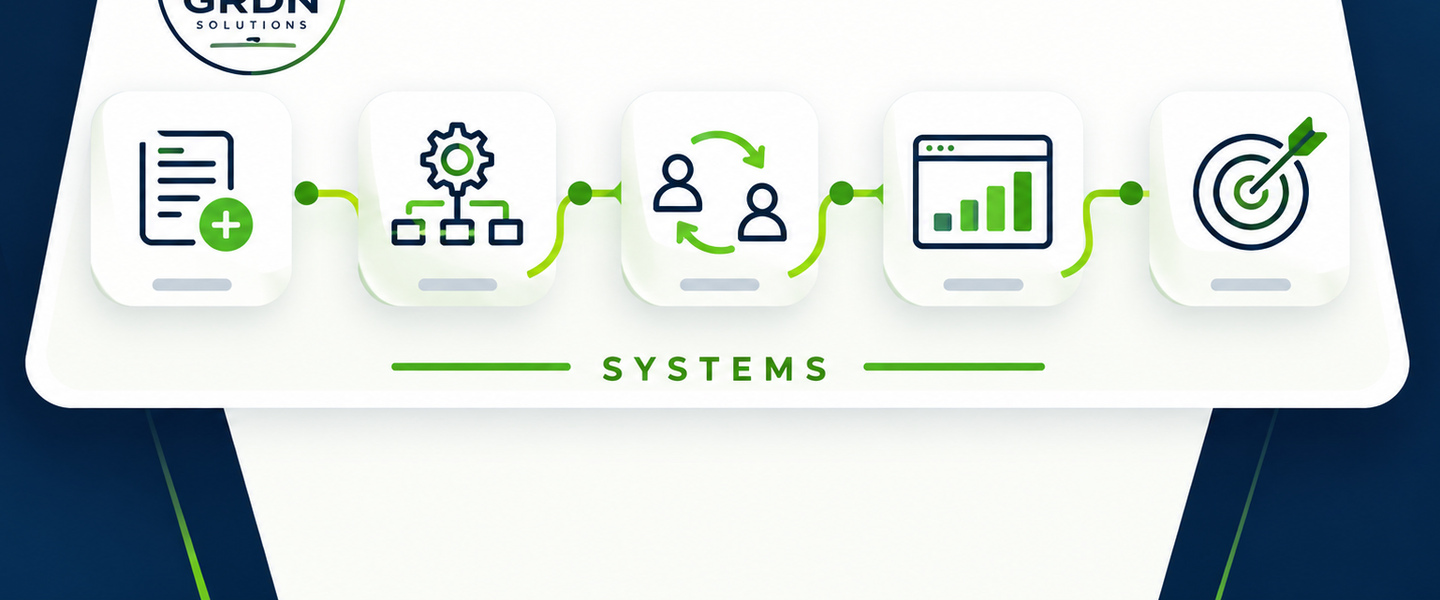
For example, a growing service business may need one intake form, a consistent assignment process, a tracker that shows status and ownership, automated reminders for overdue items, and a dashboard that summarizes what leadership needs to see. None of those pieces is complicated on its own. Together, they create a system that can handle more volume with less confusion.
Build for the next stage, not for a hypothetical giant company
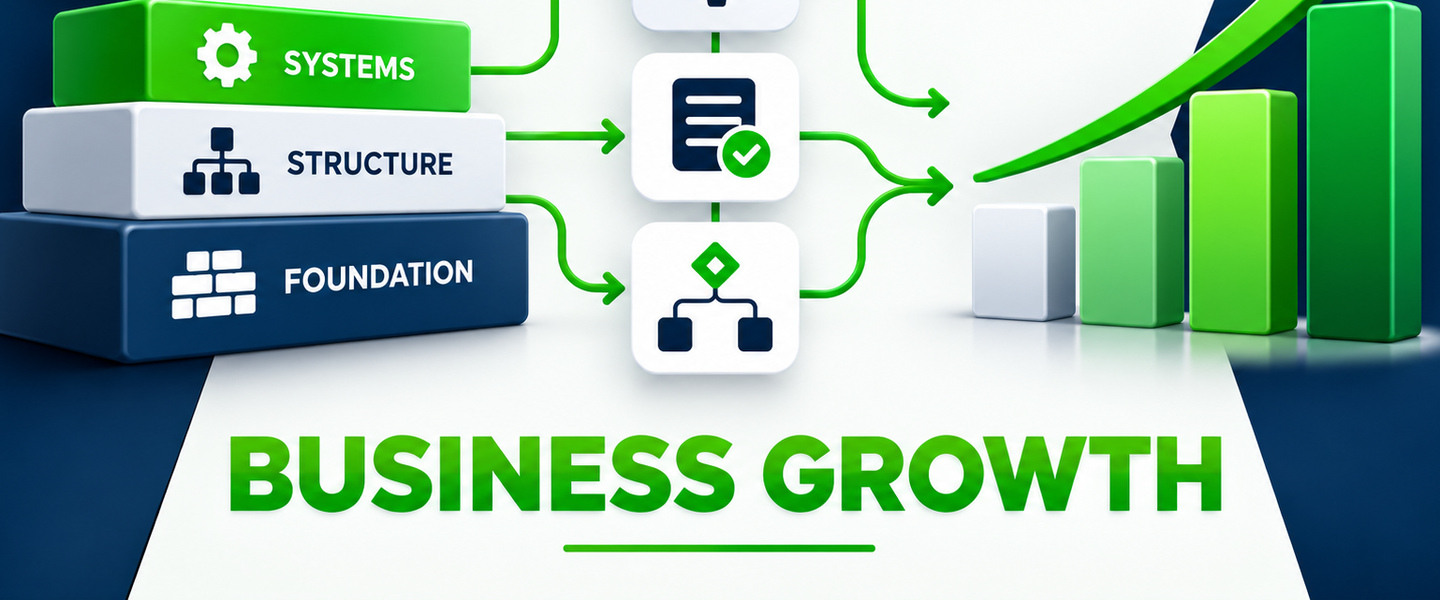
The strongest systems are appropriate for the size and complexity of the business today while making the next stage easier. A company with ten employees does not need the same infrastructure as a company with five hundred. It does need enough structure that growth does not multiply avoidable problems.
A practical system should reduce work, not create more of it. It should be understandable by the people using it. It should have a clear owner. It should produce useful information. And it should be easy enough to maintain that the business does not abandon it three months later.